
Add water
The flakes meet water for the first time in years, and soften back into a batter.
From our family starter
to your kitchen.
This sourdough starter has been part of my family for over a hundred years, passed down through four generations.
It began with my great-grandmother Anna, who lived in Kharkiv. She loved baking bread and pastries, and then carrying a basket of them outside to share with her neighbors and the children on her street. Her kitchen was always warm and welcoming, and it always smelled of fresh bread.
I was named after her. My family has always believed I inherited her love of baking and her talent for it, so every loaf I bake is my way of honoring her.
This same starter has traveled with me from Ukraine to Poland, and now to the United States. Through every move it stayed a symbol of home, family and resilience.
Today I am honored to share it with you. When you bake with it you are not only making bread. You are carrying on a tradition that has crossed generations and continents.
I hope it fills your home with the same warmth, comfort and joy that it has brought to mine.
With love, from my family's kitchen to yours, Anna


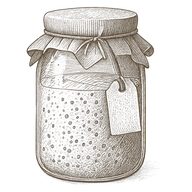
A spoonful of our own culture, dried into flakes. It keeps for years. Contains wheat.
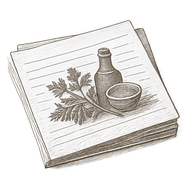
A printed card that takes you through the first week, one day at a time.

I filmed the whole thing, from the sealed packet to a living jar.

If something looks wrong, write to me. I answer every message myself.
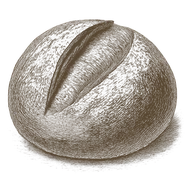
Where to start once your jar is alive and doubling every day.
The flakes meet water for the first time in years, and soften back into a batter.

Flour and water, day after day, until it wakes up and starts rising on its own.
It doubles within hours and smells faintly tangy. After that it is yours.
The weights and the day-by-day schedule are printed on the card in the packet, and on the activation guide, which is where the code on your jar takes you.
This is the same film that comes with every packet. Two and a half minutes, filmed from above my kitchen counter, with nobody talking over it.
 Watch the guide
Four to begin with. The recipes themselves are being written up now, and each one will open here as it is finished.
 No. 1
No. 1
One loaf, four ingredients, and an overnight rise.
Coming soon No. 2
No. 2
What to do with the starter you would otherwise throw out.
Coming soon No. 3
No. 3
Cold fermented for three days. Worth the wait.
Coming soon No. 4
No. 4
The forgiving one. Good olive oil, coarse salt, dimpled by hand.
Coming soonLeft on Instagram, under photographs of loaves from our kitchen. Every one of them was raised with the starter that goes into the packet.
“Loved the garlic and olive bread!”@pokerbabbo
“Just had a few slices of one with sun-dried tomatoes in it and it was delicious every bite!”@jillian_phelps04
“This bread is delicious!! I need to find out what the different options are.”@betsylphelps
Sealed, dry and out of the sun, a long time. Years rather than months. Drying does not kill the culture, it only puts it to sleep, so open the packet whenever you are ready to start.
About a week from opening the packet. The guide that comes with it walks you through each of those days, and the same guide is on the web, behind the code on the jar.
Yes. Our starter is a wheat culture, fed on wheat flour, and it is handled in a kitchen where wheat is present. It contains wheat and it is not gluten free. If you have a wheat allergy or coeliac disease, please do not use it.
In our own kitchen in California, under a cottage food registration, by the two of us. It is a home kitchen and not a commercial one. California says that has to be printed on the packet, and we would tell you anyway.
That registration lets us send our food anywhere inside California and nowhere outside it, so for now the packets travel to California addresses only. We have asked the department what it would take to send them further. If that answer changes anything, the people on our list will be the first to know.
A kitchen scale and a clean jar, and that is the whole list. Sourdough is measured by weight rather than by volume, so any scale that reads in single grams is fine.
I am putting three sets together and photographing them now. The starter on its own, a full baker's set, and one made for giving. Leave your email and I will write to you the day they go up. Nothing else, ever.
One thing worth knowing first. We bake and dry everything in our own kitchen under a California cottage food registration, and that lets us post it inside California and not beyond it. So the first packets go to California addresses. You are welcome on the list from anywhere, and if we are ever able to send further, you will hear it from us.
One message, the day the shop opens. Your address is stored for that and nothing else, and you can ask us to delete it at any time.